October 1, 2026 Post by : Editorial Seasonal Recipes
Planting a Cherry Tree: What I Wish I'd Known Before I Dug the Hole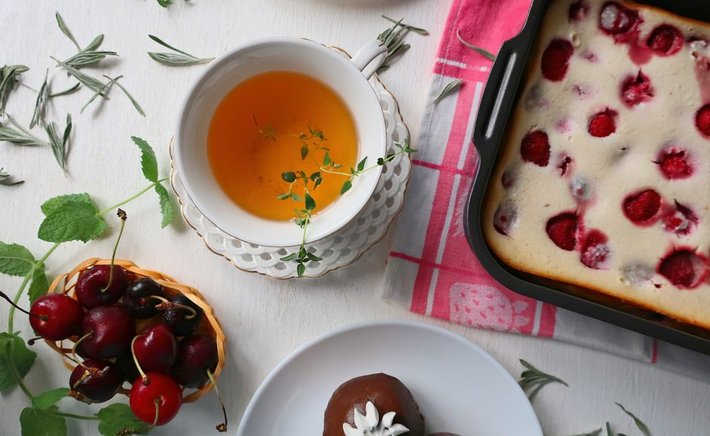
There is a particular kind of Sunday afternoon in early summer when the light comes through the kitchen window at a low angle, the cherries on the counter are impossibly dark and glossy, and the only reasonable thing to do is bake something that takes exactly as long as it needs to. Cherry clafoutis is that something.
Clafoutis (pronounced clah-foo-TEE) is a rustic French dessert from the Limousin region. It sits somewhere between a custard, a pancake, and a cake, baked in a buttered dish with cherries nestled into a soft, barely-set batter. It's not fancy. It doesn't need to be. It's the kind of dessert that shows up on a farmhouse table with a dusting of powdered sugar and a spoon, and it disappears before the coffee is even poured.
The Case for Leaving the Pits In
Traditional clafoutis is made with unpitted cherries. The pits release a subtle almond flavor as the dessert bakes, and the cherries hold their shape better when they're left whole. That said, if you're serving this to small children or anyone who would rather not navigate a pit mid-bite, pitting the cherries is perfectly fine. I usually pit half and leave half whole, which feels like a reasonable compromise.
You'll need about a pound of fresh cherries, ideally sour cherries if you can find them, though sweet cherries work beautifully too. Sour cherries give the dessert a lovely tang that balances the sweetness of the custard. If you're using frozen cherries, thaw and drain them first, and reduce the sugar slightly.
The batter itself comes together in a single bowl. Eggs, sugar, a pinch of salt, flour, milk, cream, a splash of vanilla, and a little lemon zest if you have it. Whisk until smooth, then let it rest for ten minutes while the oven heats. That rest isn't strictly necessary, but it gives the flour time to hydrate and produces a slightly more tender result. It also gives you a moment to butter the baking dish and arrange the cherries in a single layer.
Baking, Cooling, and the Patience Problem
Pour the batter over the cherries and bake at 350°F for about 35 to 40 minutes. The clafoutis is done when the edges are puffed and golden, the center is just barely set, and a knife inserted near the edge comes out clean. The center will still have a slight wobble, and that's exactly right. Overbaking turns clafoutis rubbery, so err on the side of underdone.
Now comes the hard part: let it cool. Clafoutis is best served warm or at room temperature, never hot from the oven. As it cools, the custard finishes setting and the flavors settle into something deeper and more complex. I usually let mine rest for at least thirty minutes, which is just enough time to tidy the kitchen, pour a glass of something cold, and find a shady spot on the porch.
Serve it straight from the dish, dusted with powdered sugar, with a spoonful of whipped cream or a small scoop of vanilla ice cream if you're feeling generous. It keeps for a day or two in the fridge, though it never lasts that long here.
What I love most about clafoutis is how it asks you to slow down. It's not a showstopper. It doesn't demand precision or piping bags or a perfect crumb. It just asks for ripe fruit, a warm oven, and a little patience. On the right Sunday, that's more than enough.

Author

22 feb,2025
This incident opened my eyes to the value of Insurance in general, so I decided to examine my personal and business insurance.




Comment (3)
The payments are made directly from one person to another without passing through a central bank or clearing house.
22 feb,2025
ReplyThe Quiet Ritual of Spring Pruning: A Beginner's Guide to Caring for Cherry Trees
23 feb,2025
ReplyCherry Clafoutis for Slow Sundays: A Rustic French Dessert Worth the Wait
23 feb,2025
Reply